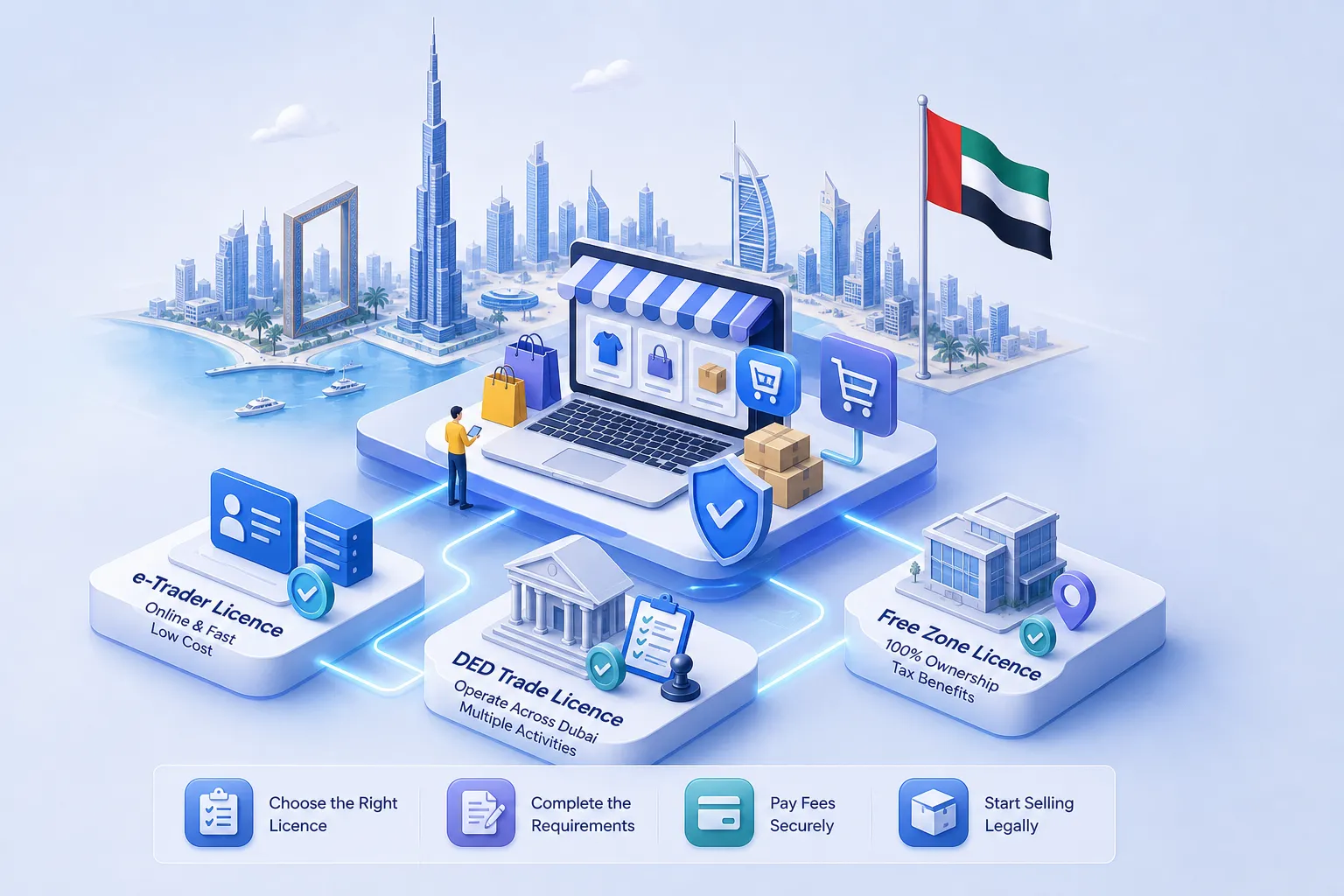
One of the first and most consequential decisions any entrepreneur faces when setting up in the UAE is the choice of company structure. Freezone, mainland, or offshore? Each has distinct advantages, limitations, costs, and target use cases. Understanding the differences before you commit will save you significant time, money, and potential restructuring costs down the road.
Quick Comparison
| Factor | Free Zone | Mainland | Offshore |
|---|---|---|---|
| Foreign Ownership | 100% | 100% (since 2021) | 100% |
| Trade Within UAE | Limited (via distributor) | Unrestricted | Not permitted |
| Physical Office | Required (flexi-desk OK) | Required | Not required |
| UAE Residency Visa | Yes | Yes | No (generally) |
| Corporate Tax | 0% on qualifying income | 9% above AED 375K | 0% (no UAE taxable income) |
| Setup Cost | AED 5,750 to 50,000+ | AED 10,000 to 25,000+ | AED 3,500 to 15,000 |
Free Zone Companies
Best for: International traders, consultants, e-commerce businesses, professionals targeting global or GCC markets
Free zones are purpose-built for foreign investors. They offer fast setup, minimal bureaucracy, and powerful tax advantages for businesses earning primarily from outside the UAE mainland. The trade-off is that selling directly to UAE mainland customers is generally not permitted without appointing a mainland distributor or obtaining a separate mainland license.
Mainland Companies
Best for: Businesses that need to trade freely across the UAE, bid for government contracts, or operate retail and physical locations
Since the landmark 2021 amendment to the Commercial Companies Law, 100% foreign ownership is now permitted in most mainland business activities without a UAE national partner. Mainland companies are licensed by the Department of Economic Development (DED) and face no restrictions on trading within the UAE.
Offshore Companies
Best for: Asset protection, international holding structures, privacy, and businesses that do not need a physical UAE presence
UAE offshore companies (registered in JAFZA or RAK ICC) are non-resident entities — they do not grant UAE residency visas, cannot operate within the UAE, and are not permitted to conduct business with UAE residents. However, they are ideal for international asset holding, IP holding, international trading, and estate planning.
Which Should You Choose?
The answer depends on your primary business activity, target market, budget, and long-term plans. As a rough guide: if you are starting out with international clients and a tight budget, start with a free zone. If you need UAE market access from day one, go mainland. If you want a pure holding or asset protection vehicle, consider offshore. Titan Partners International advisors will help you compare all three options and design the optimal structure for your goals.